Advertorial

The Senior Cat Report

Aging & nutrition

your senior cat still eats every meal. so why can you feel her spine when you pet her?
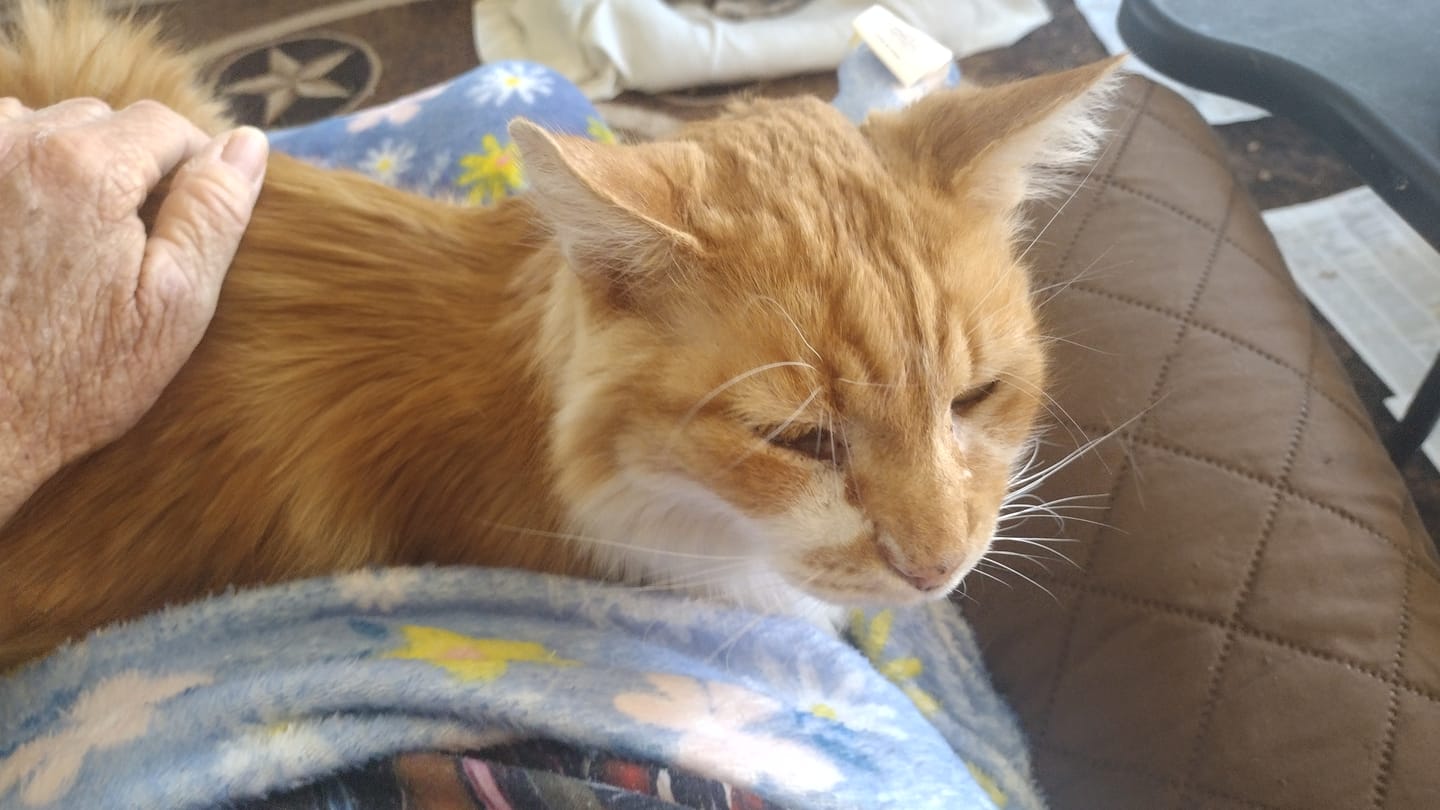
If the vet ran the bloodwork, found nothing, and said "she's just getting old," here's what's actually happening inside an aging cat's muscles. And the three nutrients her body's engine runs on.

It usually happens by accident.
 

You scoop her up to move her off the laptop. And she weighs… nothing. Like picking up a sweater.
 

Or you're petting her on the couch, and your hand slides down her back. Bump. Bump. Bump. You can count her spine.
 

She still eats. She still meets you at the door, just a little slower. So you tell yourself what everyone tells you.

"She's 14. That's what old cats do."

Maybe your vet said it too. Bloodwork clean. Thyroid fine. Kidneys okay for her age. "She's just getting older."
 

And you drove home with a strange feeling in your stomach. Because "just getting older" isn't a plan. It's a shrug.
 

Here's what nobody had time to explain in that exam room.

The weight she's losing isn't fat. It's muscle.

Between the ages of 10 and 15, a healthy cat can lose up to a third of her lean body mass. Vets have a name for it: sarcopenia. It's normal aging. That's exactly why it gets waved off.
 

But watch where it goes first. Not the belly. That soft pouch often hangs on. It's the muscle along her spine, her hips and her shoulder blades that melts away.
 

That's why you feel it in her back before you ever see it on a scale.
 

And that muscle isn't just for jumping onto the bed. It's her reserve tank. It's what her body leans on when she's sick, stressed or not eating well. The thinner that tank gets, the less she has to fall back on.

She's not "just getting old." She's running low on the one thing that keeps an old cat strong.

So why would a cat who clears her bowl every day keep losing muscle? Two reasons. The first one surprises most owners.

She's eating the same bowl. She's getting less out of it.

As cats age, their gut gets worse at pulling nutrients out of food. The numbers from feline research are hard to ignore:

1 in 3

cats over 12 digest fat less efficiently. And fat is a cat's favorite fuel.

AAHA Senior Care Guidelines, 2023

1 in 5

older cats digest protein less efficiently. Protein is what muscle is made from.

AAHA 2023; Royal Canin Academy

25%

more food. That's how much extra some senior cats need to eat just to hold their weight steady.

Little, Delaware Valley Academy of Veterinary Medicine, 2013

So the bowl looks the same. She finishes it like always. But what actually reaches her muscles has quietly shrunk.
 

And getting food in is only half the story. The other half happens inside every single muscle cell. It's the part almost nobody talks about. But first, one honest note.

Please read this before you go further

Weight loss in an older cat can be the first sign of something that needs treatment: an overactive thyroid, kidney disease, diabetes, dental pain, gut disease or cancer. No supplement fixes those. See your vet first if she's:

  • Losing weight fast (for a cat, even half a pound in a month is a lot)
  • Eating more than ever, but still getting thinner
  • Drinking or peeing more than she used to
  • Vomiting, having diarrhea, or refusing food
  • Drooling, pawing at her mouth, or has bad breath

If your vet has checked her and ruled these out, and you're still watching her shrink, keep reading. This part is for you.

The 20-second back check

Vets score muscle with their hands, not a scale. You can do a simple version tonight. When she's on your lap, lay your palm flat on her shoulders and slowly run it down to the base of her tail.

That's a well-muscled back

Good news. This is the stage to protect, not repair. Muscle is much easier to keep than to win back, so steady daily support now is the easiest time to start.

Keep reading to see what keeps that cushion in place.

That's early muscle loss

It's the most common thing vets feel on cats over 10. And it's the stage where you can make the biggest difference, because there's still plenty of muscle left to hold on to.

Keep reading. The next section explains why it's happening.

That's significant muscle loss

If she hasn't seen a vet in the last couple of months, please book a visit and ask about her "muscle condition score." Clearly visible bones should always be checked.

Once medical causes are ruled out, the rest of this article explains the daily side of the picture.

Inside every muscle: a tiny engine that needs three things

Every muscle cell in your cat's body is packed with tiny power plants. They take the food she eats and turn it into the energy that moves her, warms her and keeps her heart beating.
 

That engine only runs well when three things show up every day.

  • Fuel has to get inside

    L-carnitine, the Transporter

    Fat from her food can't walk into the power plant on its own. L-carnitine carries it through the door. Without enough of it, fuel piles up outside while the engine idles.

  • Fuel has to catch fire

    CoQ10, the Spark

    Once the fuel is inside, CoQ10 helps turn it into usable energy. The body makes its own. But in the people and animals that have been studied, it makes less and less with age.

  • The pump has to keep pushing

    Taurine, the Shield

    Her heart is the hardest-working muscle she has, and it runs on taurine. Cats can't make enough of their own. And heat-processed food loses a big share of what was in it.

Now put it together. Her gut pulls less fuel out of each meal. Her cells may turn less of that fuel into energy. So her body does what every body does when it runs short.

It borrows from muscle. Slowly. Quietly. Along the spine first.

Which is why the usual fixes help a little, then stall.

Why the things you've tried haven't stuck

What you triedWhat it does, and what it misses
Feeding her moreOften the right call, so keep doing it. But if her gut absorbs less, a fuller bowl doesn't mean fuller muscles. More fuel doesn't help an engine that can't burn it.
"Senior" cat food"Senior" usually means age 7+, and many formulas are lighter to stop middle-aged cats getting chubby. For a thin 14-year-old, vets warn that cutting protein and fat can be the wrong move. Ask your vet which one fits her.
Treats and toppersGreat for getting her to eat. They add calories. They don't touch what happens inside the cell.
Plain taurine powderCovers the pump. Leaves out the fuel delivery and the spark. One of three.
Waiting to seeMuscle leaves slowly, so it's easy to wait. It also comes back slowly, which makes every month count.

What an aging cat needs isn't another single-ingredient fix. It's support for the whole engine, every day, in a form she'll actually eat.

A daily scoop built around the aging cat's engine

That's the idea behind Catlyst Whole-Cat: all three engine nutrients in one tasteless scoop you stir into her food.
 

L-carnitine to move fuel into her cells. CoQ10 to help turn it into energy. And never-cooked taurine to keep her heart pumping it where it's needed.
 

No pills to push down her throat. No smell for her to sniff out and walk away from. Five seconds with a spoon, once a day.

What the research actually says

  • L-carnitine and lean muscle. In a 169-day study at Hill's Pet Nutrition, healthy adult cats whose food had added L-carnitine ended the study with more lean body mass than cats eating the same food without it. It was a small, early study, but the direction is clear.
  • Fuel, not muscle. In cats on weight-loss diets, added L-carnitine helped the body burn fat for fuel while keeping more of its muscle.
  • CoQ10. No large cat studies yet, and we won't pretend otherwise. It's in the formula because the energy chain can't run without it, and studies in people and lab animals show the body makes less of it with age.

So what does that look like in a real living room? Here's one owner's first two months.

Pepper, 14: "The number finally stopped going down"

Pepper's owner noticed it the usual way: the collar kept slipping around. Two vet visits. Clean bloodwork both times. "She's just old."

Week 1

Stirred a scoop into her wet food. She ate around nothing and never noticed. That was the whole first win.

Week 3

Back up on the kitchen windowsill. She hadn't made that jump since spring.

Week 6

Waiting in the hallway at 6 a.m. again, head-butting ankles until breakfast showed up.

Week 8

Vet weigh-in: the same as last time. The first visit in over a year where the number didn't drop. "Her back still has a ridge. But it doesn't feel like it's getting sharper anymore."

Representative owner account. Individual results vary. Whole-Cat supports normal muscle and energy function. It is not a treatment for weight loss caused by disease.

Notice what that story isn't. It isn't "she gained two pounds in a week." Muscle doesn't work that way, and you should be wary of anyone who says it does. The first win is usually the slide stopping. Then the energy comes back.

Catlyst Whole-Cat

Daily engine support for senior cats

L-carnitine helps carry fuel into muscle cells

CoQ10 helps turn that fuel into energy

Never-cooked taurine for everyday heart support

Tasteless, odorless powder. Stirs into wet or dry food

One 2 g scoop a day. 30 days per tub

60-day money-back guarantee

L-carnitine175 mg
Coenzyme Q1020 mg
Taurine (never-cooked)375 mg
Glycine (carrier)balance

See today's offer for Whole-Cat

Most owners start with at least two tubs. Muscle changes take longer than a month to show.

What to expect, honestly

This is daily support, not a quick fix. Here's the realistic timeline most owners describe.

Days 1–7

The habit settles in. Most cats eat it without noticing a thing.

Weeks 2–4

Some owners see more get-up-and-go first: more jumps, more wandering, more interest at mealtimes.

Weeks 4–8

The first thing to watch for on the scale is holding steady. For a cat who's been sliding, that's a real win.

Month 3 on

This is where muscle changes, if they come, start to show up under your hand. Consistency matters more than anything.

Track it at home: once a month, weigh yourself, then weigh yourself holding her, and write down the difference. Do the back check on the same day. Two numbers and one feeling tell you more than any promise on a label.

What cat parents are saying

★★★★★

My cat was starting to get very thin and I didn't know why. He has a tremendous appetite but was still losing weight. I ordered this product and could tell within just a few days that he was feeling perkier and after 2 weeks he has already put some weight back on. I'm very happy with this product

Donna I.
★★★★★

She look so bad before this whole cat, like she was dying but started giving it to her every day now she want to eat, be loving sleep with me again and actually using the cat trees we have. Usually she would just lay on my computer desk and not do much. Whole cat help so much I'm be ordering again

Christina S.
★★★★★

So far so good, I really hope it's working. I'm pretty sure it is he's running around like a kitten again

Kim T.
  • The 60-Day Back Check Guarantee

    Do the back check tonight. Give her 60 days of Whole-Cat. If you're not happy with what you see and feel, contact us and we'll refund your order in full.

The 60-Day Back Check Guarantee

Do the back check tonight. Give her 60 days of Whole-Cat. If you're not happy with what you see and feel, contact us and we'll refund your order in full.

Questions owners ask

Will Whole-Cat make my cat gain weight?

It isn't extra calories, so it won't add weight on its own. It supports the muscle and energy systems that help her use the food she already eats. If she needs to gain, calories come from her food, and your vet can tell you how much. For many owners, the first win is the weight holding steady.

My vet said she's just old. Should I go back?

If she has any of the signs in the note above, yes. Fast weight loss, a huge appetite with weight loss, drinking more or vomiting all need a vet. If she's been checked recently and those are ruled out, daily nutritional support is a reasonable next step. Tell your vet you're adding it.

She's picky. Will she eat it?

It's a tasteless, odorless powder, and most cats don't notice it in wet food. For very fussy cats, start with half a scoop for the first week, mix it into a small portion she always finishes, then build up.

Is it safe for a cat with kidney issues or on medication?

Taurine and L-carnitine are water-soluble and generally well tolerated. But if she has kidney disease, heart disease or takes any medication, check with your vet before adding any supplement.

How is this different from senior cat food?

Food is the fuel. Whole-Cat supports how her body moves that fuel into her cells and turns it into energy. They work together. Keep feeding the food your vet recommends.

I already give her plain taurine. Do I need this?

Plain taurine covers one of the three. Whole-Cat includes a full daily dose of taurine plus L-carnitine and CoQ10, so you can switch over instead of adding a second product.

I have two cats. How long does a tub last?

One scoop per cat per day. A tub lasts one cat 30 days, or two cats about 15 days.

How long before I notice anything?

Energy and behavior changes, if you see them, often come first, within a few weeks. Muscle and weight change more slowly, over two to three months. That's why the guarantee is 60 days, not 7.

What if it doesn't work for her?

Contact us within 60 days and we'll refund your order in full.

She's kept you company for years. This is one small thing you can do back.

She can't tell you she's running low. She just gets a little lighter. Skips the windowsill. Sleeps through breakfast.
 

You noticed. That's why you're still reading.
 

One scoop a day. Sixty days to see for yourself. And a back that, month by month, stops feeling like it's getting sharper.

Start Whole-Cat today

60-day money-back guarantee

Title

This is an advertisement for Catlyst Whole-Cat. The case study is a representative account; individual results vary.
 

These statements have not been evaluated by the Food and Drug Administration. This product is not intended to diagnose, treat, cure or prevent any disease. Weight loss in senior cats can signal a medical condition; consult your veterinarian if your cat is losing weight or has a health condition.

Sources


  1. AAHA 2023 Senior Care Guidelines for Dogs and Cats, Nutrition section (lean body mass loss 10–15 yrs; fat and protein digestibility).
  2. Royal Canin Academy, Nutrition of aging cats (digestibility, lean mass, muscle condition).
  3. Little S. Weight loss in senior cats. Delaware Valley Academy of Veterinary Medicine, 2013 (up to 25% more food to compensate).
  4. Perez-Camargo G, Patil AR, Cupp CJ. Incidence of impaired nutrient digestibility in aging cats. Comp Contin Educ Pract Vet, 2004.
  5. dvm360, That skinny older cat: healthcare management in the aging cat (protein and fat restriction in underweight seniors).
  6. WSAVA Global Nutrition Committee, Muscle Condition Score chart for cats.
  7. Hill's Pet Nutrition. Dietary carnitine and carnosine increase body lean in healthy cats in a preliminary study. Animals, 2021.
  8. Center SA et al. Clinical and metabolic effects of rapid weight loss in obese pet cats and the influence of supplemental oral L-carnitine. J Vet Intern Med, 2000.
  9. Hickman MA, Morris JG, Rogers QR. Effect of processing on fate of dietary taurine in cats. J Nutr, 1990.

© 2026 Catlyst · getcatlyst.com · Privacy · Terms · Contact